
Part 4
Peace doesn’t always feel like peace at first. Sometimes it feels like waiting for the next thing to break.
The first month after the no-contact order, Lily still flinched when the doorbell rang. Not every time, but often enough that I noticed. She’d pause mid-sentence, eyes darting toward the sound, shoulders tight.
“Do you want me to check?” I’d ask gently.
She’d nod, and I’d go look through the peephole and call back, “Just a delivery,” or “It’s Mrs. Patel from next door,” and Lily’s body would relax like she’d been holding her breath.
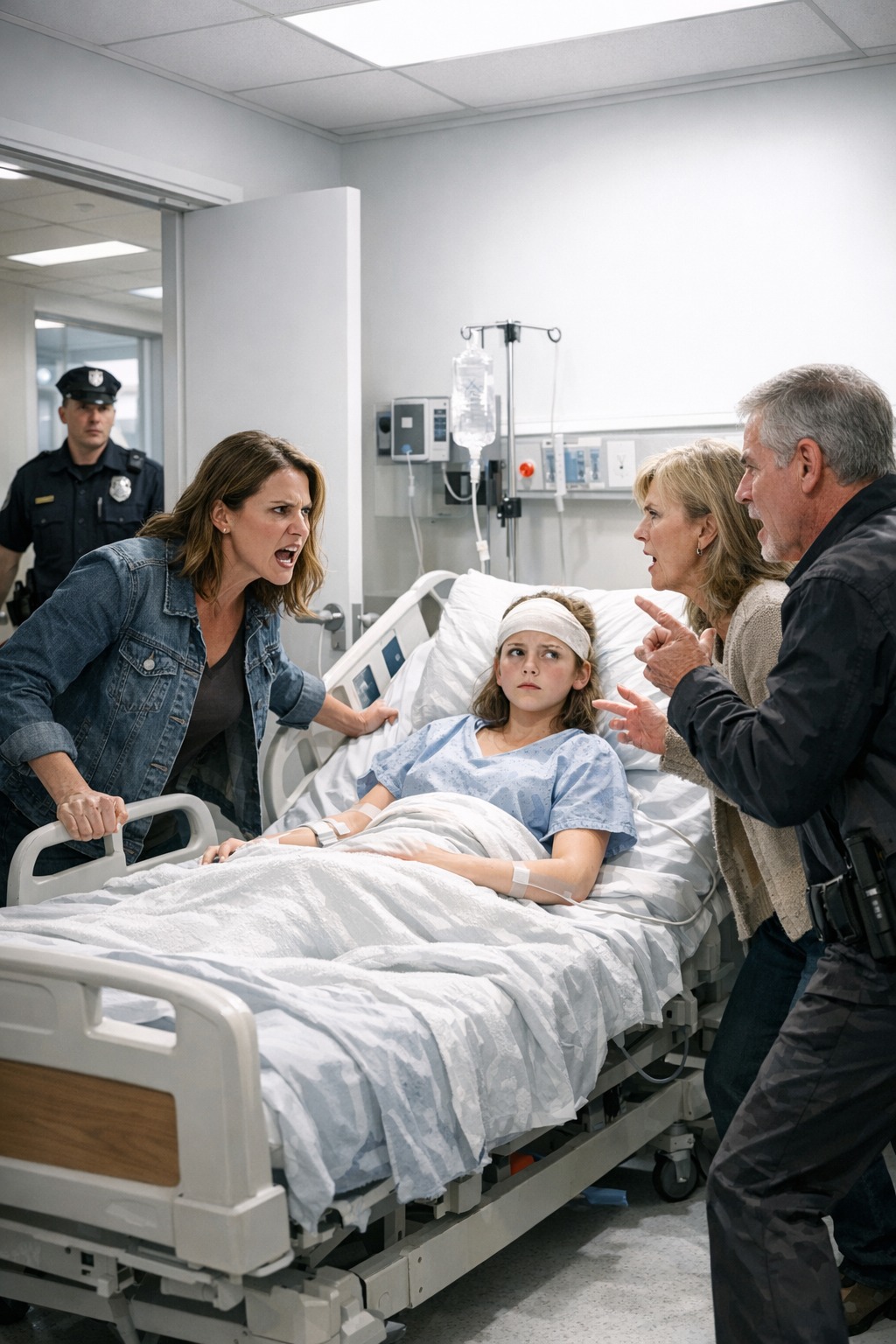
In therapy, Lily talked about the hospital room in fragments. The way my mom smiled when she said terrible things. The way my dad sounded bored when he wished her dead. The way she felt like she’d done something wrong simply by surviving.
The therapist taught her something that sounded too simple to matter until you watched it work: separating facts from interpretations.
Fact: I had anxiety.
Interpretation: That makes me a burden.
Fact: My grandparents said something cruel.
Interpretation: That means I deserve cruelty.
They practiced pulling the interpretations away like weeds.
At school, Lily’s friends made get-well cards and asked about her scars with the curiosity of thirteen-year-olds who are just learning bodies can fail. Lily told them she had emergency surgery and then changed the subject. She didn’t mention her grandparents.
She didn’t have to.
I started paying attention to the way Lily’s laugh returned—not all at once, but in little bursts. A meme that got her giggling. The dog doing something stupid. A silly argument over which cereal was best. Those moments used to be interrupted by dread. Now they stacked up into something stable.
Meanwhile, my parents behaved exactly like the kind of people who’d say a child should have died: they acted like victims.
My mom sent one email to my work address, because she couldn’t help herself. It was long and dramatic and full of capital letters.
You are tearing this family apart. You always have.
We were UNDER STRESS.
You are being CRUEL.
Lily needs discipline, not therapy.
We have RIGHTS.
I forwarded it to my lawyer and didn’t reply.
Then my dad tried to call from an unknown number. I didn’t answer. He left a voicemail anyway.
“Rachel,” he said, sighing, like I’d annoyed him by existing. “You’re being childish. You can’t keep a granddaughter from her grandparents because you got offended.”
Offended.
He called telling a child she should have died “offended.”
I saved it. Forwarded it. Documented it.
The second month was when Lily started to talk about the future again. It happened casually, in the car, when the sky was pink and the radio was playing some pop song she pretended to hate.
“Do you think I could try out for the school play next semester?” she asked.
My hands tightened on the steering wheel. It wasn’t a big question, but it was proof she was imagining herself still here, still growing.
“Yes,” I said. “If you want to. We’ll do it.”
She nodded, staring out the window. “I think… I want to do something where people can see me and I don’t have to apologize for it.”
I swallowed hard. “That sounds like a good reason.”
On a Friday in late November, the no-contact order was tested for the first time.
I was in the grocery store, pushing a cart with Lily beside me. She was wearing a hoodie and her hair was tucked behind her ears, and she looked like any other thirteen-year-old, which still felt like a miracle.
Then Lily froze.
Her hand tightened around the cart handle. Her eyes went wide.
I followed her gaze.
At the end of the aisle, my mother stood with a basket of apples, staring at us like she’d found something she’d misplaced. My father was beside her, expression blank.
Time did that strange slow stretch it does when your body is deciding how to survive.
My mom started walking toward us, smile already forming, ready to perform forgiveness.
I stepped in front of Lily, blocking the aisle.
“Stop,” I said.
My mom’s smile faltered. “Rachel.”
“You’re violating the order,” I said evenly. “Turn around and leave.”
My dad’s eyes narrowed. “This is ridiculous.”
Lily made a small sound behind me. A breath caught in her throat.
My mom tried the soft voice. “Lily, sweetheart—”
“Do not speak to her,” I said, louder.
My mother’s face hardened. “You can’t keep doing this.”
I pulled out my phone. “I can. Watch.”
I didn’t call 911. I called the non-emergency line and asked for an officer to respond to a no-contact order violation. I spoke clearly, calmly, like this was a routine transaction, because that calm is what keeps you safe.
My dad’s mouth tightened. “You’d call the police on your own parents?”
“I’ll call the police on anyone who endangers my child,” I said.
My mom looked around at the shoppers passing by, suddenly aware that her performance had an audience she couldn’t control. She hated that. She hated looking bad more than she loved anything.
She grabbed my dad’s sleeve and hissed, “Fine. Come on.”
They left without another word.
Lily’s knees looked wobbly. I turned and put my hands on her shoulders.
“You okay?” I asked.
She nodded, but tears were in her eyes. “I didn’t think they’d really go away,” she whispered.
“They don’t get to decide,” I said. “We do.”
In the car, Lily stared at her lap. Then she said, very quietly, “Thank you for being mean to them.”
I blinked. “I’m not trying to be mean.”
“I know,” she said. “I just… it feels like someone finally picked my side.”
I reached over and squeezed her hand. “I picked you the second you were born,” I said. “And I’ll pick you every time.”
Part 5
Six months after the hospital, life was still life—messy, imperfect, full of laundry and homework and days when Lily’s anxiety flared for no clear reason. But the air in our house had changed.
It didn’t feel like we were bracing anymore. It felt like we were building.
Lily kept going to therapy. She learned how to name panic before it turned into a wave. She learned that her thoughts were not laws, just weather passing through. Some days were sunny. Some days were storms. Neither meant she was broken.
She joined the drama club. Her first audition was in the school library, fluorescent lights buzzing, kids whispering. Lily’s hands shook when she held her script. Then she took one breath—one of the breathing techniques she’d practiced—and did her lines.
When she walked out, she looked dazed.
“How was it?” I asked.
She blinked and then smiled, small but real. “I didn’t die,” she said.
I laughed, surprised by the relief in it. “That’s a good start.”
She got a small role. Two lines. A background scene. But she came home after rehearsals with spark in her eyes.
“I like being someone else for a little while,” she told me one evening while we ate tacos on the couch. “It’s like… my brain shuts up.”
“Your brain doesn’t have to be the boss,” I said.
She rolled her eyes, but she didn’t argue.
Meanwhile, my parents tried other routes.
They mailed cards addressed to Lily. I returned them unopened. They showed up once at Lily’s school office, smiling like doting grandparents. The school turned them away and called me immediately, exactly as promised.
My lawyer sent a letter reminding them that further violations would result in enforcement actions. After that, they got smarter. They stopped showing up in public places where they could be documented easily.
They shifted to guilt.
My mom posted vague social media statuses about heartbreak and being kept from a grandchild. People commented supportive things. My mom liked them all, collecting sympathy like it was currency.
A few extended relatives called me.
“Your mom’s really hurting,” my aunt said.
“She hurt my child,” I answered.
“She didn’t mean it like that,” my aunt insisted.
“She said the words out loud to a child in a hospital bed,” I said. “That’s exactly how she meant it.”
The calls slowed after that. Some people don’t want truth. They want comfort.
One evening in early spring, Lily came downstairs and sat at the kitchen table while I paid bills. She watched me silently for a minute.
“Mom,” she said.
I looked up. “Yeah?”
“Did Grandma and Grandpa… were they always like that with you?”
The question landed like a stone in water. Ripples of old memories rose. My mother’s disappointment when I cried. My father’s lectures about being “too sensitive.” The way I learned to anticipate moods, to become small, to earn peace by not needing anything.
I didn’t want to pour my whole childhood into my daughter’s lap. But I didn’t want to lie.
“They were,” I said carefully. “Not always in the same words. But the same… feeling.”
Lily nodded slowly. “So it wasn’t me.”
“No,” I said. “It was never you.”
She swallowed. “Then why did you keep them around?”
I stared at the numbers on my screen and felt the shame rise. Not because Lily was accusing me. Because she deserved the truth.
“Because I kept hoping,” I admitted. “I kept thinking if I did the right thing, if I explained it the right way, if I tried hard enough, they’d become the kind of parents and grandparents they were supposed to be.”
Lily’s eyes were steady, older than thirteen for a moment. “That’s not fair,” she said quietly. “It shouldn’t be your job to fix them.”
Something softened in my chest. “You’re right,” I said. “It shouldn’t.”
That weekend, we painted Lily’s room a soft green because she said it felt calmer. We moved her bed under the window. We put up shelves for her books. We hung a little corkboard where she pinned quotes from her therapy sessions, not because they were profound but because they made her feel in control.
One quote was written in her neat handwriting:
I am not a problem to solve.
I stood in her doorway and stared at it longer than I meant to.
Then, on a cloudy Saturday afternoon, my parents showed up at our door.
I saw them through the window. My mom holding a bouquet of store-bought flowers. My dad holding a card. Their posture was practiced, like they’d rehearsed humility in the car.
My stomach went tight. Lily was upstairs in her room, watching a show, the dog curled at her feet.
I opened the door but didn’t invite them in.
“What do you want?” I asked.
My mom’s voice trembled. Real tremble this time. “We need to talk.”
“We don’t,” I said.
My dad stepped forward slightly. “We’ve had time to think.”
“We’re sorry,” my mom said quickly. “We said things we didn’t mean.”
I laughed, and it came out bitter and ugly. “You told my daughter she should have died.”
My mom flinched, but her eyes flashed irritation beneath the tears. “We were under stress.”
“You drove two hours to deliver that message,” I said. “That’s not stress. That’s intention.”
My dad held up the card like it was evidence. “We want to make this right.”
“You can’t,” I said. “Some things don’t get repaired.”
My mom’s face crumpled. She started crying harder. “But we’re family.”
“Not the family that matters,” I said, and my voice stayed calm, which felt like power. “Lily is my family. You are not safe for her.”
My dad’s jaw clenched. “Rachel, you can’t punish us forever.”
“This isn’t punishment,” I said. “This is protection.”
My mom reached forward as if to touch my arm. I stepped back. “You’re violating the order. You have thirty seconds to leave before I call the police.”
My dad’s eyes widened. “You’d really—”
“Yes,” I said. “And I’ll do it without shaking.”
My mom looked past me into the house like she was searching for Lily. “Lily, sweetheart—”
“She’s not coming,” I said. “And you’re not speaking to her.”
I closed the door in their faces and locked it.
Through the window, I watched them stand there for a long moment. My mom pressed the flowers to her chest like a prop. My dad stared at the door like he wanted it to open out of sheer force.
Then they walked away.
Lily came down the stairs quietly, eyes searching my face.
“Were those… them?” she asked.
“Yeah,” I said.
“Are they gone?” she asked, voice tight.
“Yeah,” I said. “They’re gone.”
Lily exhaled and then did something that made my eyes burn: she smiled.
“Good,” she said, and wrapped her arms around me. “Thanks for picking me, Mom.”
I held her and kissed the top of her head. “Always,” I said. “Always.”
Part 6
After my parents showed up at the house, the tone of everything shifted again. Not in our home—our home stayed steady. But outside, the pressure increased.
People who don’t get access to you often try to get access to your reputation instead.
My mom called extended family and told them I was “unstable.” She claimed Lily was being “brainwashed.” She used words like alienation and cruelty, as if my boundaries were violence.
My lawyer warned me this was common. People who need control don’t accept no; they look for side doors.
A week later, a letter arrived from a law office.
Grandparent visitation.
I stood at the kitchen counter with the envelope in my hand, my pulse thudding. The phrase felt like a threat wearing a suit.
Lily was in the living room, laughing at something on her phone. I didn’t want her to see my face.
I took the letter to my room, shut the door, and read.
It was written in careful legal language about family bonds and emotional wellbeing and the importance of maintaining relationships. It painted my parents as devoted grandparents being unfairly cut off by a spiteful daughter.
I could almost hear my mother’s voice behind the words, coaching the narrative: Make yourself the victim. Make her look unreasonable. If you can’t be loved, be pitied.
I called my lawyer.
She listened, then said, “We respond firmly. We attach the no-contact order, the hospital incident documentation, the grocery store violation, the school attempt. We show a pattern. Judges take child safety seriously. Your parents have a documented history of emotional abuse toward Lily. That matters.”
“Will we have to go to court?” I asked, even though I hated asking anything that sounded like fear.
“Possibly,” she said. “But you’re not walking into this empty-handed.”
For the first time, I understood something I’d never fully grasped before: boundaries aren’t just emotional. In a world that loves “family” as a concept, sometimes you need boundaries with signatures.
The court hearing was scheduled for late summer.
I didn’t tell Lily the details at first. I didn’t want her carrying adult battles in her backpack. But kids are smarter than adults give them credit for, and Lily could feel the tension.
One night, she came into my room and sat on the edge of my bed, twisting the hem of her shirt.
“Are they trying something?” she asked.
I hesitated, then decided honesty was kinder than mystery. “They’re trying to force contact,” I said carefully. “Through the courts.”
Lily’s face went pale. “Do I have to see them?”
“No,” I said quickly. “No. And we’re going to make sure the court understands why.”
Lily’s eyes filled. Not with fear this time—anger.
“They don’t get to do that,” she whispered.
“You’re right,” I said. “They don’t.”
Over the next months, we prepared. My lawyer gathered statements. Lily’s therapist wrote a letter about Lily’s progress since no contact, and about the harm the grandparents caused. The school provided documentation of the attempted pickup.
I wrote my own statement, including a section that made my hands shake as I typed: the exact words my parents said in the hospital room.
Your anxiety… you’re bad for this family… it would have been better if you hadn’t made it.
Writing it down felt like dragging something poisonous into the light and letting it burn.
On the day of the hearing, Lily stayed home with a trusted neighbor. She didn’t need to sit in a courtroom while adults argued about her like she was property.
I walked into the courthouse alone, wearing a simple dress and flats that didn’t click too loudly. My lawyer walked beside me, calm, professional.
My parents sat across the room. My mother wore a cardigan and a soft expression. My father looked stern, like he was there to correct a child.
They didn’t look at me as a person. They looked at me as an obstacle.
When the judge asked why contact was cut off, my parents’ lawyer gave a speech about misunderstandings and stress and the importance of family forgiveness.
Then it was our turn.
My lawyer spoke about safety. About harm. About documented violations of the no-contact order. About the hospital incident and Lily’s emotional devastation. She referenced the therapist’s letter.
Then she asked me to speak.
I stood, hands steady, and told the truth. I didn’t embellish. I didn’t dramatize. I just said what happened and what it did to my child.
The judge’s expression changed gradually—from polite neutrality to something sharper.
My mother shook her head during my statement, as if I were lying. My father stared at the ceiling like he was bored.
When I finished, the judge asked my parents one question.
“Did you tell your granddaughter it would have been better if she died?”
My mother’s mouth opened, and for once her performance faltered. “We didn’t mean—”
“That’s not what I asked,” the judge said.
My father cleared his throat. “We were under stress.”
The judge’s eyes narrowed. “You were under stress in a hospital room with a recovering child?”
Silence.
The judge looked down at the paperwork again, then up.
“Petition denied,” she said. “Given the documented evidence of emotional harm and repeated violations of a no-contact order, the court finds that forced visitation is not in the best interest of the child.”
My mother made a small choking sound. My father’s face reddened.
The judge continued, “Furthermore, any future attempts to contact the child in violation of existing orders will be treated seriously.”
It was over in minutes. Years of my parents’ entitlement collapsed under the weight of one clear sentence: not in the best interest of the child.
Outside the courthouse, my parents approached me like they couldn’t help themselves, like losing only made them louder.
My mother hissed, “You’ve ruined us.”
I looked at her and felt something surprising: nothing. No guilt. No fear. Just distance.
“You ruined yourselves,” I said.
My father stepped closer. “You’ll regret this.”
“I regret letting you near her for as long as I did,” I said calmly.
Then I walked away.
That night, I went home and Lily met me at the door. Her eyes searched my face.
“It’s done,” I said.
Lily sagged with relief. She hugged me hard. “Thank you,” she whispered.
I held her and thought about how many times I’d been trained to pick my parents over my own instincts.
That training ended here.
