
Part 11
The emergency happened on a normal Thursday, which somehow made it worse.
No family gathering. No dramatic confrontation. No proving a point.
Just lunch.
Sam and I had gone to a new café near my office that claimed it was allergy-aware. They had a printed allergen chart. They had “no nuts in the kitchen” written on a sign by the register. The staff seemed confident.
I ordered something simple and safe on paper: grilled chicken, rice, steamed vegetables. No sauces. No garnishes. No mystery.
I watched them prepare it. I watched the cook change gloves. I watched the food come out on a clean plate.
We sat at a corner table, and I took a bite.
At first, nothing.
Then, a warm flush spread across my face. My skin prickled. The inside of my mouth felt slightly strange, like my tongue didn’t know where to sit.
My chest tightened.
Sam’s eyes snapped to my face. “Olivia,” he said softly.
I set my fork down. My pulse surged. The room felt suddenly louder.
My throat began to feel thick.
This wasn’t the dramatic full collapse of the shrimp pasta night. This was the quieter, terrifying kind: a reaction creeping in while the world kept pretending everything was normal.
I didn’t hesitate.
I reached into my bag, pulled out my EpiPen, and pressed it to my thigh the way I’d practiced a hundred times.
Click.
A sharp sting. The rush of medication. The cold wave of adrenaline that made my hands shake and my heart hammer.
Sam was already standing, phone in hand. “I’m calling 911,” he said.
The café manager hurried over, alarm replacing confidence. “What’s happening?”
“She’s having an allergic reaction,” Sam said firmly. “Do you have cameras? We’re going to need to document what she ate and how it was prepared.”
The manager looked stunned. “But we’re— we don’t use—”
“Not the time,” Sam cut in. Not rude. Just focused.
I sat very still, breathing carefully. The EpiPen didn’t make me feel magically better. It gave me a chance. It bought my body time.
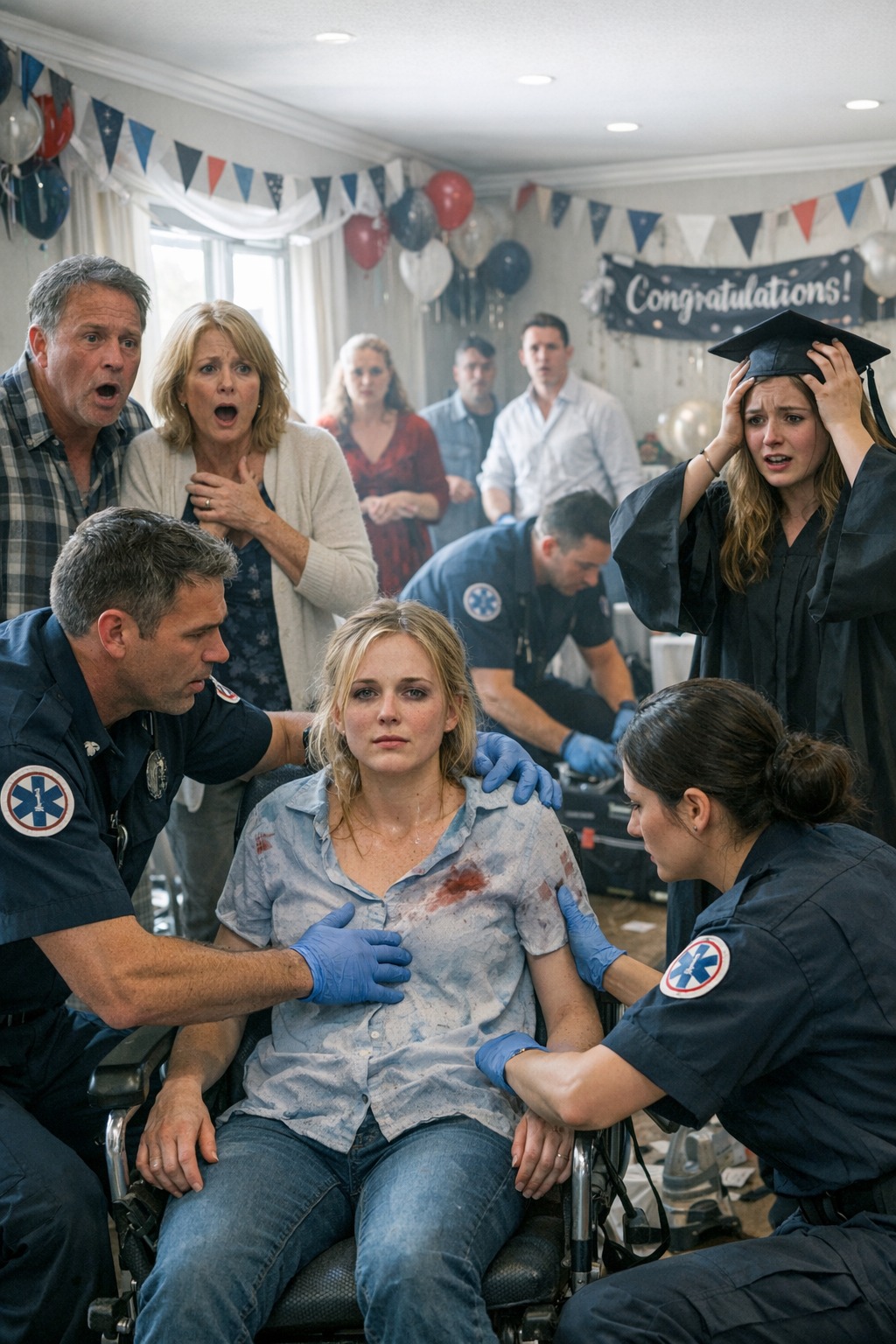
When the paramedics arrived, they treated me like I mattered. Like urgency wasn’t optional. They checked my airway, monitored my vitals, and loaded me onto the stretcher with calm efficiency.
In the ambulance, the medic asked, “Do you have a history of anaphylaxis?”
“Yes,” I rasped.
“Good call using the EpiPen early,” she said. “That probably prevented a worse outcome.”
At the hospital, they observed me for hours. My symptoms stabilized, but the emotional aftershock was heavy. I kept thinking: I did everything right. And it still happened.
When I was finally discharged, my phone was full of missed calls.
Mom. Dad. Kate. Mike.
Mike was the first to answer when I called back.
“Where are you?” he demanded, voice tight.
“I’m okay,” I said quickly. “I had a reaction. I used my EpiPen. Sam called 911. I’m home now.”
There was a pause, then Mike exhaled shakily. “I’m coming over.”
“You don’t have to—”
“I’m coming,” he said, and that was that.
Within an hour, my apartment doorbell rang. Mike, Kate, Mom, and Dad stood there like they’d run through traffic to get to me. Mom’s eyes were red. Dad looked furious, but not at me—at the universe, at the café, at the idea that danger still existed.
Sam let them in, calm as ever, and explained what happened. He spoke in facts. Timeline. Symptoms. Action taken. He didn’t add drama. He didn’t soften it either.
Kate’s hands shook. “You used it,” she whispered, staring at my bag like it was a sacred object.
“Yes,” I said. “Immediately.”
Mom stepped forward slowly, like she was afraid I’d vanish. “I’m so sorry,” she said.
It was reflexive, the apology. But this time I didn’t bristle. I understood what she meant: I’m sorry this is your life. I’m sorry it’s still hard.
Dad’s jaw clenched. “What did you eat?”
I told them. I also told them we didn’t know yet what caused it. Cross-contamination. Hidden ingredient. Human error.
Dad turned to Sam. “You did everything right,” he said, and his voice cracked slightly.
Sam nodded. “She did,” he said. “She didn’t hesitate.”
Mike sat on my couch and put his head in his hands. “This is what I hate,” he muttered. “Even when we’re careful, it can still happen.”
“Yes,” I said quietly. “That’s the reality.”
Mom sat beside me, hands clasped tightly. “Do you want us to stop having family dinners?” she asked, panicked. “Do you want—”
“No,” I said gently. “I want you to keep living with me. Not around me. With me.”
Kate nodded hard, tears falling. “We will.”
That night, after they left, Sam and I sat in silence for a while. My body felt drained, like I’d run a marathon inside my bloodstream.
Sam finally spoke. “Do you feel like you’re back at the beginning?”
I thought about it. About the old fear. The old doubt.
“No,” I said. “I feel like I proved something to myself.”
“What?” he asked.
“That I don’t freeze anymore,” I said. “I don’t wait for permission to take myself seriously.”
Sam’s eyes softened. “That’s huge.”
I nodded, tired but steady. “And it means no one gets to mock me ever again,” I added. “Not my family. Not a stranger. Not even that voice in my head.”
Part 12
Two years after the shrimp pasta dinner, my family gathered at a community center on a Saturday morning, wearing name tags and carrying notebooks like we were attending a seminar.
Because we were.
The center hosted a monthly program for families managing severe food allergies: education, cooking demonstrations, emergency response drills, and support groups. Dr. Patel had connected me to it after my hospitalization, and I’d slowly become one of the volunteer coordinators.
I didn’t plan it that way. I just kept showing up. At first, to feel less alone. Then, because I realized how many people were still stuck in the stage I’d lived in for years: dismissed, doubting, quietly suffering.
That morning, I watched my dad help set up chairs while my mom organized pamphlets with practiced efficiency. Kate handed out allergy-safe snacks and double-checked labels with the intensity of a professional. Mike demonstrated an EpiPen trainer for a nervous group of teenagers.
Sam stood beside me, holding a box of laminated emergency plan cards we’d printed for new families. He nudged my shoulder gently. “Look at them,” he murmured.
I looked.
My family, the people who once mocked me, were now teaching other people how to protect their kids.
It didn’t erase the past, but it did transform it into something that wasn’t just pain.
After the session, a woman approached me with her son. The boy looked about ten, small and wary, holding his mother’s hand like he was bracing for adulthood.
“He keeps saying certain foods make him feel weird,” the mother said softly. “The school thinks he’s faking.”
My stomach tightened, old memory flaring.
I crouched to the boy’s level. “You’re not in trouble,” I told him. “And ‘weird’ is a real feeling. Your body is trying to tell you something.”
The boy’s shoulders loosened slightly.
The mother’s eyes filled. “Thank you,” she whispered.
On the drive home, my mom was quiet. Then she said, almost to herself, “I wish someone had told me that when you were sixteen.”
I stared out the window at passing trees. “I wish you had listened when I told you,” I said gently.
Mom nodded, swallowing. “I know.”
At my apartment, Sam helped unload supplies from the car. He moved around my kitchen like he belonged there, washing his hands automatically, wiping counters, checking the pantry.
“You’re nesting,” I teased, and then the word hung in the air in a strange way.
Sam paused, then smiled slowly. “Maybe I am,” he said.
My heart flickered. “Why?”
He leaned against the counter and looked at me with that steady expression that never asked me to be smaller. “Because I’ve been thinking,” he said. “About long-term. About the life we’re already building.”
I held my breath, suddenly nervous.
Sam reached into his pocket and pulled out a small box.
My first instinct was laughter, then tears, then both at once.
“Olivia,” he said softly, “I don’t want you to do this alone. Not the planning, not the risk management, not the endless label-reading, not the fear. I want to be your person. Officially. If you’ll have me.”
I stared at him, my vision blurring.
My chest didn’t tighten from allergy. It tightened from the overwhelming relief of being chosen without conditions.
“Yes,” I whispered.
Sam exhaled like he’d been holding his breath too, and then he slipped the ring on my finger. It wasn’t flashy. It was simple and beautiful and real.
My family found out ten minutes later because Mike called, and Sam answered, grinning, and couldn’t help himself.
Mike’s shout through the phone was loud enough that I pulled the device away from my ear.
Kate screamed. Mom cried. Dad cleared his throat repeatedly like he was fighting tears and losing.
That evening, we did what my family now did best: we planned safely.
Not just food. Not just menus. We planned a life.
Kate offered to find a caterer experienced with severe allergies. Mike offered to coordinate with venues about cross-contamination policies. Mom offered to cook a safe rehearsal dinner herself if needed. Dad offered to pay for a professional allergen audit of the kitchen.
I looked at them all and felt something settle deep in my bones.
For years, dinner had been the place where I felt unsafe in my own family. Now, dinner was where they proved they’d changed.
On the night of my engagement, we ate at my apartment. A simple meal. Safe ingredients. Normal laughter.
At one point, Kate raised her glass. “To Olivia,” she said, voice thick. “For surviving. For teaching us. For making us better, even when we didn’t deserve it.”
I swallowed hard. “To all of us,” I said. “For finally believing the truth without needing a crisis to force it.”
Everyone nodded.
After they left, Sam and I stood in my quiet kitchen. The EpiPens were still by the keys. The emergency plan still taped inside a cabinet. My reality didn’t disappear just because happiness arrived.
But happiness didn’t require denial.
Sam wrapped his arms around me from behind and rested his chin on my shoulder. “You’re safe,” he said softly.
I leaned back into him and took a slow, steady breath.
Not because the world had become harmless.
Because I had finally stopped living in a world where the people who loved me were the ones insisting I was lying.
That was the ending I needed.
Not a cure.
A life built on trust.
THE END!
Disclaimer: Our stories are inspired by real-life events but are carefully rewritten for entertainment. Any resemblance to actual people or situations is purely coincidental.
