
Part 3
Wednesday came fast.
I packed in quiet bursts between work and sleep. Boxes stacked like proof. My basement apartment emptied room by room, the walls revealing faint scuffs where my desk had sat, where I’d taped up schedules for bar prep, where I’d written myself small reminders on sticky notes: Keep going. Don’t quit. Future you is watching.
On my last morning there, I swept the floor twice, wiped down the counters until they shined, and left the key on Madison’s kitchen counter with a simple note.
Thank you for the roof. I’m taking it from here.
I didn’t wait to see her reaction.
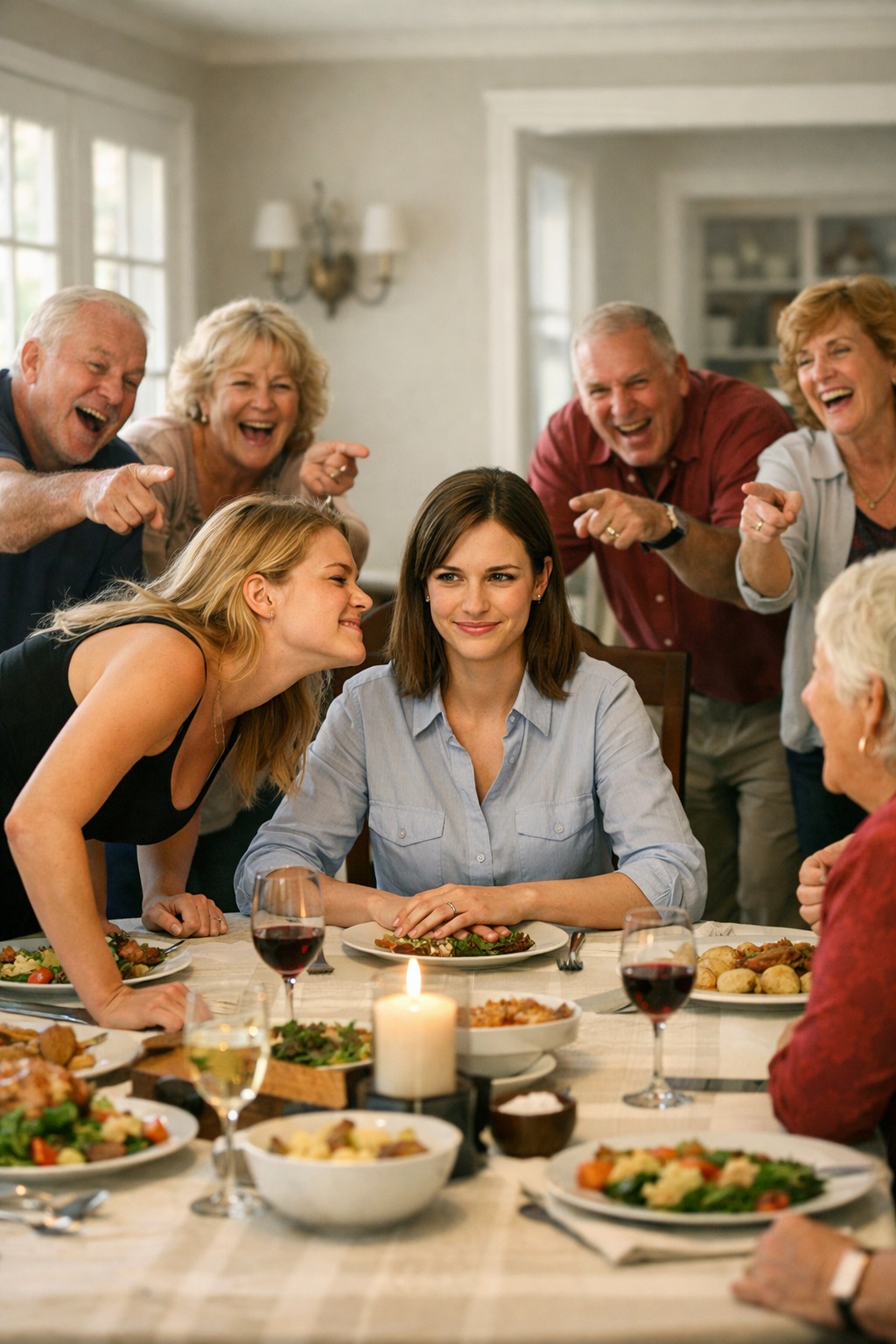
Closing day felt almost anticlimactic, like the climax had already happened at that dinner table.
I sat in a conference room with a stack of documents thick enough to qualify as furniture. My realtor slid papers toward me. My attorney—someone I’d hired even though I could technically do it myself because I’d learned the value of having a team—watched for details.
I signed my name again and again and again until my hand cramped.
Then the seller’s agent handed me a small ring of keys.
My keys.
My house.
I walked through the front door alone first.
The Victorian smelled like dust and old wood and second chances. Sunlight poured through tall windows, catching the worn edges of the floorboards. The place needed work. The kitchen was stubbornly stuck in the 1980s. The paint colors were choices someone had made during a fight.
But the bones were solid.
The house felt like something that had survived its own story—and was ready for another.
An hour later, Catherine arrived with cheap champagne and plastic cups because she believed in celebrations that didn’t wait for perfect.
“You did it,” she said, grinning.
“I did,” I said.
We clinked cups in the empty living room.
“You know,” Catherine added, leaning back against a doorway, “your sister thought she was humiliating you.”
“She was,” I said.
“And you smiled.”
“I did,” I agreed.
Catherine’s eyes gleamed. “Because you knew.”
I looked around at the empty rooms, the quiet, the space that belonged to me.
“Because I knew,” I said.
The weeks after that were busy in the best way. I painted walls. Scheduled contractors. Pulled up carpet to reveal hardwood worth saving. I learned my neighbors’ names. I ran miles along the riverwalk early in the morning, feeling like I was moving forward on purpose.
Work got heavier too. My caseload grew. I started specializing in divorces with complicated finances—hidden assets, secret accounts, spouses who smiled while lying. I could spot the patterns. I knew the language of manipulation, the way it tried to make you doubt your own memory.
When a client cried and said, “I feel stupid,” I didn’t comfort her with clichés.
I said, “You’re not stupid. You’re being played. Let’s end the game.”
Meanwhile, Marcus emailed me his restaurant plan.
It wasn’t bad. It was just unfinished—like him.
I marked it up in red and sent it back with notes: show your numbers, not your dreams. Identify your risks. Build contingencies. Stop assuming passion is a business model.
He called me that night, voice a mix of defensive and grateful. “You’re brutal.”
“I’m honest,” I said.
Silence. Then: “Can you… help me do it right?”
I thought of Madison at the head of her table, smug with superiority. I thought of Marcus’s exhausted face, the way he looked like he’d been holding his breath in his own life.
“Yeah,” I said. “I can help you do it right. If you’re willing to work.”
He did work.
And when the commercial property auction came, I won it.
Not by throwing money at it—by preparing. By knowing my ceiling and refusing to get emotional. By remembering that calculated risk was different from gambling.
Madison didn’t come to my housewarming party a month later until she was almost an hour late. When she arrived, she wore her perfect smile like a mask and walked through my renovated living room as if she was touring a property she might buy.
“It’s… nice,” she said, like that word cost her.
“Thanks,” I said, not biting, not begging.
My parents showed up early. My mother brought a casserole like I was still twenty-two and fragile. My father walked through the house quietly, touching the crown molding, studying the woodwork.
“This is solid,” he said, which in Dad-language meant you did good.
Tyler showed up with his girlfriend and announced, loudly, “I always knew Emma was secretly Batman.”
I laughed harder than I expected.
Late in the evening, after the last guest left, Madison lingered on my porch.
“Can we talk?” she asked.
I didn’t owe her conversation. But I wanted to know who she was when she wasn’t performing.
So I nodded.
We sat side by side, the street quiet, the porch light warm.
Madison stared at her hands. “I was jealous,” she said finally, voice flat with the honesty she usually avoided.
I didn’t speak.
“I built my whole identity on being first,” she continued. “First marriage. First house. First promotion. And when you… when you crashed… it made me feel safe.”
That landed in my chest like a stone.
Madison swallowed. “And then you stood up at that dinner and showed me you were never… less. You were just rebuilding. And I hated that I didn’t know.”
“You didn’t ask,” I said quietly.
“I know,” she whispered.
Silence stretched.
Then she said, “I’m sorry.”
It wasn’t dramatic. It wasn’t cinematic. It didn’t erase the last two years, or the way she’d used my low point as a stage.
But it was real.
I exhaled. “I’m not looking for you to grovel.”
Madison nodded stiffly. “Then what do you want?”
I looked out at the street, at my house behind me, at the life I’d built with my own hands.
“I want you to treat me like an equal,” I said. “Not a rival. Not a charity case. Not a cautionary tale.”
Madison’s throat bobbed. “I can try.”
“Don’t try,” I said gently. “Do.”
She sat with that.
Then she nodded again—smaller this time. “Okay.”
When she left, I stayed on the porch a while longer, letting the quiet wrap around me.
My phone buzzed with a text from Catherine.
Auction went well. Proud of you. Also, you’re buying more property than some people buy shoes. Don’t get cocky.
I smiled.
Because the ending I’d needed wasn’t Madison apologizing.
It wasn’t my family finally clapping for me.
It was this:
I had a roof nobody could threaten. A future nobody could hold hostage. A life built on decisions instead of desperation.
And that meant, no matter what my family did next—no matter what Madison tried next—there was one thing she could never do again.
She could never raise the price of my peace.
