
Part 3
The police found Patricia three days later in Tampa, at her sister’s house, one suitcase half-packed and her passport sitting on the counter like a trophy.
She had been planning to flee to the Cayman Islands, where the Williams family kept accounts that had existed longer than my medical degree. She’d assumed money could outpace law.
Instead, she was arrested and extradited back to Illinois.
David insisted on pressing charges.
Robert, his father, tried to intervene at first—not to protect Patricia out of love, but out of habit. Out of the same reflex that made him say, “Let’s handle this privately,” whenever Patricia shattered something.
But the toxicology report changed his face. It turned his avoidance into fear.
When Robert finally visited David in the hospital, he stood at the foot of the bed with his hands clasped like a man waiting for a verdict.
“I didn’t know it was this bad,” Robert said quietly.
David stared at him. “You didn’t want to know,” he replied.
Robert flinched. It was the closest I’d ever seen him come to shame.
Patricia’s lawyer tried to paint it as misunderstanding. Stress. A mother caring too much. A tea meant to help.
But the evidence didn’t bend.
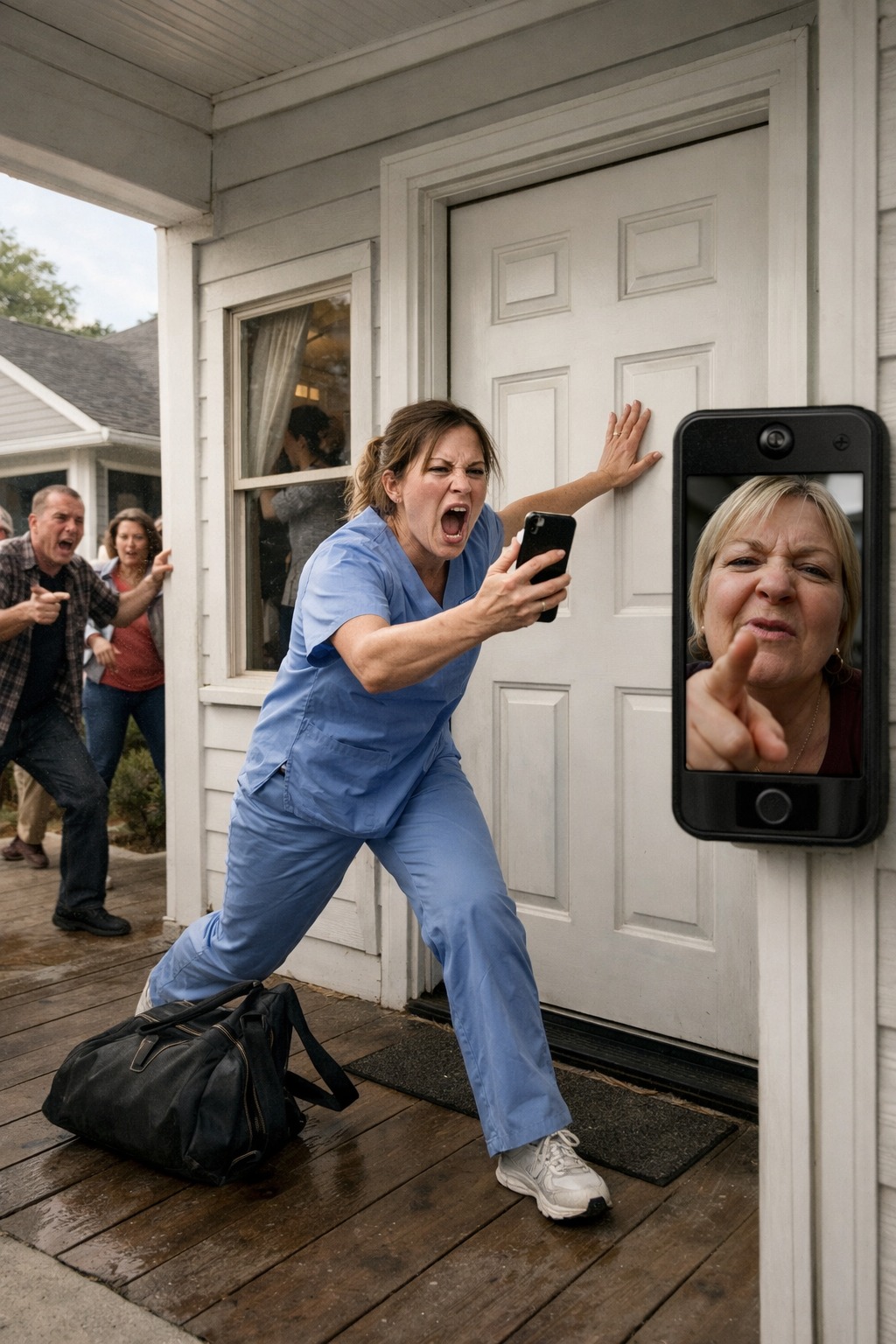
My cloud backups had preserved the security camera footage Patricia tried to delete. Every smug word through the speaker. Every claim that David “finally saw sense.” The boxes on the porch. The lockout.
And Mark, furious and finally done, handed over more: screenshots of Patricia’s texts, messages where she hinted she’d “fix things” and “remove obstacles.” He also provided the key detail that collapsed the defense entirely—Patricia had been researching medication interactions and dosage timing.
It wasn’t a mistake.
It was a plan.
Jennifer built the case like she was assembling a skeleton: clean structure, no drama. She didn’t need drama. Patricia provided enough of that on her own when she realized nobody was playing along anymore.
In pretrial hearings, Patricia sat in court with her hair perfect and her posture rigid. She looked around the room like she expected someone to rescue her—Robert, the judge, God.
Nobody did.
David began therapy while the case moved forward, and it nearly broke him.
Not because he didn’t love me. He did. He always had.
But because he had been trained his whole life to treat his mother’s behavior as normal. Patricia’s manipulation wasn’t new. It had simply escalated into a crime that couldn’t be brushed away.
In therapy, David started discovering memories like bruises: childhood moments where Patricia cried until he apologized for things he didn’t do, teenage years where she sabotaged friendships, college choices steered by guilt.
He realized his “good son” identity had been built out of fear.
The day he finally said it out loud—My mother doesn’t love me, she owns me—he vomited afterward, like his body was purging the truth.
I sat with him through the shaking, through the insomnia, through the nightmares where he woke up sweating and asking if I was still there.
“I’m here,” I would whisper every time. “I’m not going anywhere.”
But I also held boundaries like a lifeline.
When Patricia tried to call from jail, I didn’t answer. When she wrote letters, Jennifer told us not to read them. We filed them away for court. Evidence, not communication.
At trial, David took the stand.
He looked different by then—still tired, but clearer. His shoulders were straighter, his eyes less foggy, like someone who’d finally stepped into air after living underwater.
The prosecutor asked him to describe what happened.
David’s voice didn’t shake. “My mother brought me tea,” he said. “Every night. She told me it would help me relax. I trusted her.”
Patricia stared at him, eyes sharp, silently demanding loyalty.
David didn’t give it.
“I didn’t consent to medication,” he continued. “I didn’t consent to being kept in that house. I didn’t consent to my wife being locked out of her home.”
Patricia’s mouth tightened.
When the prosecutor played the security camera recording, Patricia’s own voice filled the courtroom—smug, sneering, certain.
The jury watched her face as she heard herself.
That was the moment her mask cracked.
She tried to cry then, but the tears looked like performance. Too late. Too practiced.
Robert testified too, quietly providing years of hidden evidence he’d kept out of fear: recordings of Patricia escalating, notes about her obsessive control, a private investigator report he’d commissioned years ago and ignored because admitting the truth would have required action.
After closing arguments, the jury deliberated less than a day.
Patricia was convicted.
The sentencing wasn’t cinematic. No dramatic screams. No collapsing in the aisle.
The judge read the list of charges and the length of the sentence with the same tone I used when I delivered bad news in the ER: clear, precise, final.
Fifteen years.
When they led Patricia away, she looked smaller than I expected. Not because prison humbled her instantly, but because her power was gone. She couldn’t manipulate a system that didn’t care about her tears.
She turned her head once toward David, searching his face for that old reflex.
David didn’t look away, but he didn’t soften either.
He just watched her go, expression steady.
Afterward, in the hallway outside the courtroom, David leaned into me slightly like he needed grounding. Mark stood on the other side, arms crossed, eyes bright with contained emotion.
Robert hovered nearby, not sure if he deserved to be included.
“I filed,” Robert said quietly, voice barely audible. “Divorce.”
David looked at him. “Good,” he said. Not forgiving. Not cruel. Just factual.
Then David looked at me, and his eyes filled.
“We’re leaving,” he said.
Not running.
Choosing.
