
Part 5
By January, the holidays were packed away, but the aftertaste of that Christmas dinner still lingered like smoke in fabric. Noah stopped mentioning it outright, yet I noticed the way he watched adults more carefully than he used to. At the grocery store, if an older woman smiled at him, he smiled back politely, but his body stayed ready to retreat. At school pickup, if a parent raised their voice at their kid, Noah’s shoulders crept upward as if bracing for impact.
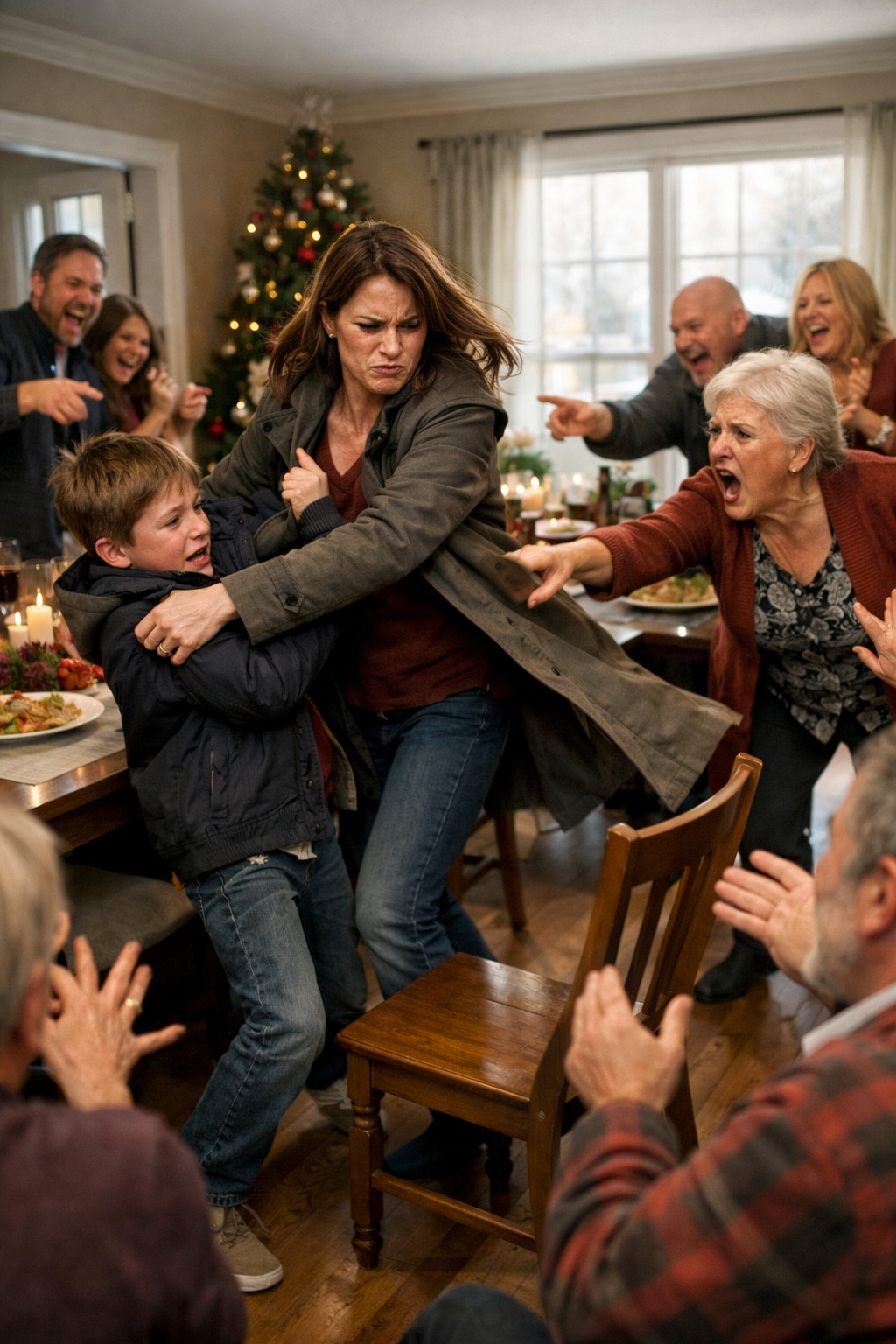
Kids don’t forget the first time they’re publicly declared less-than.
I didn’t want that moment to become his inner narrator.
So I made new rituals, small ones. Saturday morning pancakes with sprinkles even when it wasn’t a birthday. A jar by the front door where we dropped slips of paper labeled “good things” whenever something made us laugh. Movie nights where Noah got to pick the snack and no one made comments about how much sugar he was eating.
It wasn’t bribery or distraction. It was rewriting the idea of home as a place where affection didn’t come with a scorecard.
Meanwhile, my father kept calling. Sunday evenings became the predictable slot where he practiced being a person instead of a manager. At first, he talked like he still needed permission.
“I don’t want to bother you,” he’d start.
“You’re not bothering me,” I’d say, even if the conversation felt like walking on a bridge still under construction.
He asked about Noah’s spelling words. He asked about my work. Then, slowly, he began asking questions that sounded like confession without the drama. How do you stop thinking the worst is coming? How do you know when you’ve done enough? What do you do when you realize you were wrong for a long time?
I didn’t have perfect answers. I had boundaries and honesty.
“You don’t fix the past by demanding it disappear,” I told him one night. “You fix it by showing up differently.”
He went quiet, then said, “I think I’m learning how little I actually knew you.”
I stared at my kitchen sink, at the plate Noah had left with a smear of jelly on it. “Yeah,” I said. “Me too.”
In late January, Leah asked if we could meet for coffee. She sounded different over the phone—less sharp, less rehearsed. I said yes, but I picked a place with wide windows and plenty of people, because family had trained me to treat every meeting like a negotiation.
Leah arrived early, fidgeting with her cup sleeve. When she saw me, she stood like she wasn’t sure whether to hug me. I didn’t offer one, but I didn’t pull away when she touched my arm.
“I’m sorry,” she said, and for once she didn’t add a qualifier.
I waited.
“I’m sorry I laughed,” she continued. “And I’m sorry I didn’t stop Mom. I keep replaying it. I keep seeing Noah’s face.”
Hearing my son’s name in her mouth without a jab attached felt strange.
She took a breath. “I started therapy,” she blurted, like she expected me to mock it.
I didn’t. “How’s that going?”
Leah’s eyes widened slightly, as if she’d prepared for a fight and gotten a door opening instead. “Hard,” she admitted. “It turns out I learned a lot of things that weren’t normal.”
“No kidding,” I said, and she gave a small, shaky laugh.
Then she did something I didn’t expect. She slid her phone across the table.
On the screen was a list of payments, dates, and notes. My father’s business loan. My monthly transfers. A second stream of money moving out under vague labels. “Consulting.” “Supplies.” “Emergency.”
“Kyle,” Leah said quietly.
I scrolled. My stomach tightened. It wasn’t just a little help here and there. It was systematic. Years of it.
“I don’t know what to do with this,” Leah said. “Dad’s trying to get out from under it. But Kyle is… Kyle.”
That name still made heat climb into my throat.
“Where is Kyle now?” I asked.
Leah grimaced. “He’s ‘between opportunities.’”
Which in our family meant: failing loudly, being rescued quietly.
I pushed the phone back toward her. “I’m not going to fix it,” I said. “But I’m glad you told me.”
Leah nodded. “I didn’t tell you because I needed you to save anything,” she said quickly. “I told you because you deserved to know the truth.”
That was new. Maybe therapy was working.
Two weeks later, Kyle finally showed up. He didn’t call first. He never did. He believed in door-slamming entrances like they were proof of importance.
Noah was at my neighbor’s house for a playdate when I heard the knock—hard, fast, entitled.
I opened the door and saw my brother on the porch, hands shoved into his pockets, jaw clenched like he was already arguing with someone in his head.
“You really did it,” he said.
“Hi, Kyle,” I replied, because politeness is sometimes a weapon when someone expects chaos.
He stepped closer as if he could push the air around me. “Dad says the payments stopped because of you.”
“They stopped because of me,” I said. “That’s accurate.”
Kyle laughed, sharp and disbelieving. “You can’t just decide you’re done.”
“I can,” I said, and it wasn’t bravado. It was fact. “And I did.”
His face twisted. “You’re acting like you’re better than everyone.”
I leaned against the doorframe. “I’m acting like I’m responsible for my child. That’s it.”
Kyle’s eyes narrowed. “So this is about the cookie.”
“It’s about the cookie,” I agreed. “And the slap. And the laughing. And the years I paid for a business that was also paying for you.”
Kyle’s expression flickered for half a second, then hardened into offense. “Dad told you about that?”
“I found out,” I said. “And you’re not getting anything from me.”
Kyle scoffed. “You always were dramatic.”
I smiled slightly. “You always were expensive.”
Kyle’s cheeks flushed. “You think you can just cut family off and life gets better?”
“No,” I said. “I think cutting off the parts that hurt you is the reason life finally can.”
He stared at me, searching for a crack. When he didn’t find one, his voice rose. “You’re going to regret this.”
“Maybe,” I said. “But regret is easier than living like a doormat.”
Kyle stood there for another moment, then spat, “Mom’s right about you.”
That one landed, because it was meant to.
I held his gaze anyway. “Tell her she’s welcome to apologize,” I said. “Otherwise, she can stay gone.”
Kyle stormed off, and I closed the door gently behind him. No shaking hands. No racing heart. Just a quiet certainty.
The next time Noah asked about Grandma, it wasn’t fear in his voice. It was curiosity, like he was trying to understand a weather pattern.
“Is she still mad?” he asked.
I brushed his hair back. “She’s choosing not to talk,” I said. “That’s her choice. It’s not because of you.”
Noah chewed on that. “I don’t want her to be mean again.”
“She won’t get the chance,” I said. “I promise.”
