
Part 5
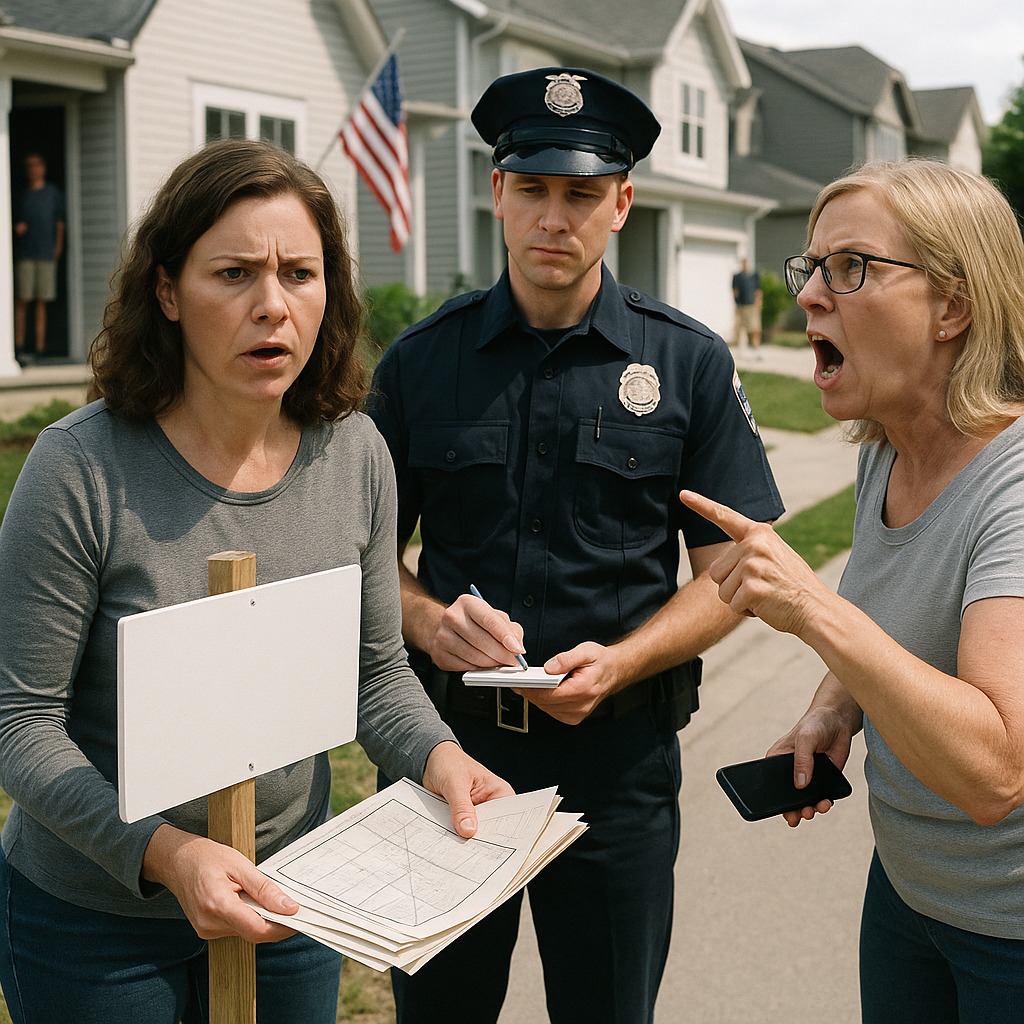
Life in the subdivision didn’t magically turn into a Hallmark movie after that. There was no group hug on the cul-de-sac. No sudden transformation of every neighbor into the best version of themselves.
What did change, slowly and irreversibly, was the balance of power.
The HOA board was forced to hold new elections under county supervision. Rick “chose not to seek re-election,” which we all knew was code for “told to sit down.” The treasurer resigned. Karen tried to run for president and came in fourth in a field of four.
At the first meeting of the new board, she sat in the audience instead of at the front table, arms crossed, foot bouncing. When the chairwoman—a calm, no-nonsense accountant named Teresa—started talking about revising the covenants to strip out the most ridiculous rules, someone asked a question about the back strip.
“What about that land?” they said, nodding toward me. “Is it…off-limits now?”
Teresa looked at me. “Ethan, do you want to speak to that?”
I stood, aware of Karen’s glare like a sunburn on the side of my face.
“I didn’t buy that parcel to spite anyone,” I said. “I bought it to stop an abuse that had been going on for years. My plan is to clean it up, put in some trees, and let the kids use a small portion as a nature path. Liability-wise, I can’t officially open it to everyone, but if you’re respectful and ask, I’m not going to be out there with a measuring tape.”
“So…no more fines?” someone called.
I smiled. “If anyone sends you a violation letter about that strip, you can tell them to take it up with me. And I’m not real big on fines.”
A few chuckles, a few sighs of relief.
Karen shot up from her chair like she’d been launched.
“So you get to decide everything now?” she demanded. “We traded one dictator for another?”
“No,” I said. “We replaced a group pretending to be the law with an actual owner responsible for actual liability. If you wanted to control it, you could’ve bought it yourself. You didn’t. The county gave you that chance for ten years.”
“You’re just going to profit off of us,” she accused. “Raise property values and sell.”
I laughed softly. “Karen, my kids are growing up here. I’m not flipping a ditch for fun.”
Teresa tapped her pen. “Let’s keep this focused,” she said. “We can’t vote on land we don’t own. We can, however, decide what kind of HOA we want to be. Or if we want to be one at all.”
The room hummed.
My work in that arena settled into something quieter. I offered to help draft clearer, narrower rules. I pushed for banning fines for cosmetic nonsense. I insisted we get a real lawyer to review everything instead of relying on “what we’ve always done.”
But I didn’t join the board.
Instead, I focused on what I’d intended to do from the beginning.
I claimed my land.
Not with fences and anger, but with trees.
Lily and I spent one whole spring weekend pulling out waist-high weeds, hauling off old beer cans and broken branches, and marking where the new saplings would go. Dogwoods along the road. Two oaks near the back. A line of low-growing shrubs to define the edge without feeling like a prison wall.
As we worked, neighbors slowed their walks, curiosity beating caution.
“That looks nice,” Mrs. Chen said, pausing with her dog. “Much better than the jungle it was.”
“You’re welcome to walk the path when it’s done,” I told her. “Just…maybe don’t let Bingo dig in the flower beds.”
She laughed. “Deal.”
Mark helped me install a low, simple rope along the property line with small plaques: Please respect private property. Ask before entering beyond this point.
No yelling.
No threats.
Just boundaries, clearly marked.
One afternoon, as I was tamping in the last post, I heard that now-familiar click of sneakers on pavement.
Karen.
She stopped at the edge of the gravel, eyes scanning the tidied strip, the young trees, the sign.
“This is what you wanted?” she asked. “All this drama, just to put up some plants and a sign?”
“No,” I said. “This is what I wanted: to know where my land ends and yours begins. To make sure you can’t decide that for me.”
She scoffed. “You think you’ve won something.”
“It’s not a game,” I said. “At least, it shouldn’t be.”
She looked at the pendant around her neck—a tiny silver house with the words Home Sweet Home stamped on it—then back at me.
“You humiliated me,” she said.
“You called 911 and tried to turn me into a threat,” I replied. “All because you couldn’t accept that the world didn’t match the map in your head.”
For a second, I thought she might actually apologize. Her mouth opened. Her eyes flicked to the camera on the shed, now a familiar sentinel.
Then her chin lifted.
“You’re not as innocent as you pretend,” she said. “You enjoyed this. Making me look foolish.”
“Honestly?” I said. “No. I enjoyed watching the county hold you accountable. There’s a difference.”
She spun on her heel and walked away.
She didn’t move.
Not right away.
But she stopped calling 911 for noise that didn’t exist.
She stopped slipping anonymous notes into people’s mailboxes about their trash lids.
She stopped treating the HOA like a throne.
Consequences will do that to some people.
Not all.
But some.
One year later, Officer Davis stopped by the cul-de-sac on his way off shift. He parked, rolled down his window as I was mulching around the oak saplings.
“Looks good,” he said. “Better than the dust bowl it was.”
“Thanks,” I said. “Fewer police visits, too.”
He grinned. “We had a memo come down: ‘Stonebridge Oaks HOA calls to be handled with enhanced scrutiny.’ That was code for ‘Karen cried wolf one too many times.’”
“Any charges?” I asked.
“DA gave her a slap on the wrist,” he said. “Deferred prosecution, conditional on no more false reports. But that paper trail? It’s there now. Next time she tries this stunt, it’s not ‘first offense’ anymore.”
“Good enough,” I said.
He nodded toward the sign. “Funny how a little metal and wood can start all this.”
“It wasn’t the sign,” I said. “It was what it represented. Lines matter.”
“You’d make a good cop,” he said.
“I like being able to choose who I fight,” I replied.
He laughed, saluted, and drove off.
The kids grew. The saplings did too. Seasons spun past—Halloween decorations, Christmas lights, first days of school.
Sometimes I’d stand at the window in the kitchen with a mug of coffee and watch as neighbors used the new path respectfully: parents with toddlers looking for squirrels, teenagers cutting through on their way to the bus stop, Mrs. Chen with a basket of vegetables for someone recovering from surgery.
They’d pause at the little sign I’d added under the original one.
Respect this space, and you’re welcome here.
I never had to enforce it.
Not once.
Word got around: The guy with the ditch isn’t the enemy. He’s the reason we got our money back for bogus fines. He’s the reason the board thinks twice now before writing a violation.
He’s the reason we can breathe a little easier.
