
Part 3
I didn’t call them first.
I called my bank.
I sat at my kitchen table while Maya slept on the couch, still wrapped in our blanket, and I logged into every account I had. I found every automatic transfer. Every scheduled payment. Every “recurring assistance” I’d set up during moments of guilt and exhaustion.
Cancel.
Cancel.
Cancel.
Then I moved my money. Not in a dramatic, slam-the-door way. In a careful, methodical way. New account, new routing, new barriers between my income and their entitlement.
My phone buzzed while I worked.
My mother: Did you send it? Mortgage pulls today.
I typed one sentence and hit send before I could second-guess myself.
I’m not paying anything for you anymore.
No explanation. No apology. I didn’t owe either.
The call came within minutes.
Brian.
I let it ring.
My mother.
Ring.
My father, who almost never called me directly.
Ring.
I stared at the screen until the calls stopped.
Maya stirred on the couch, eyes blinking open. She sat up slowly, hair a mess, and looked at me like she was trying to figure out if the world was stable.
“Are you mad?” she asked.
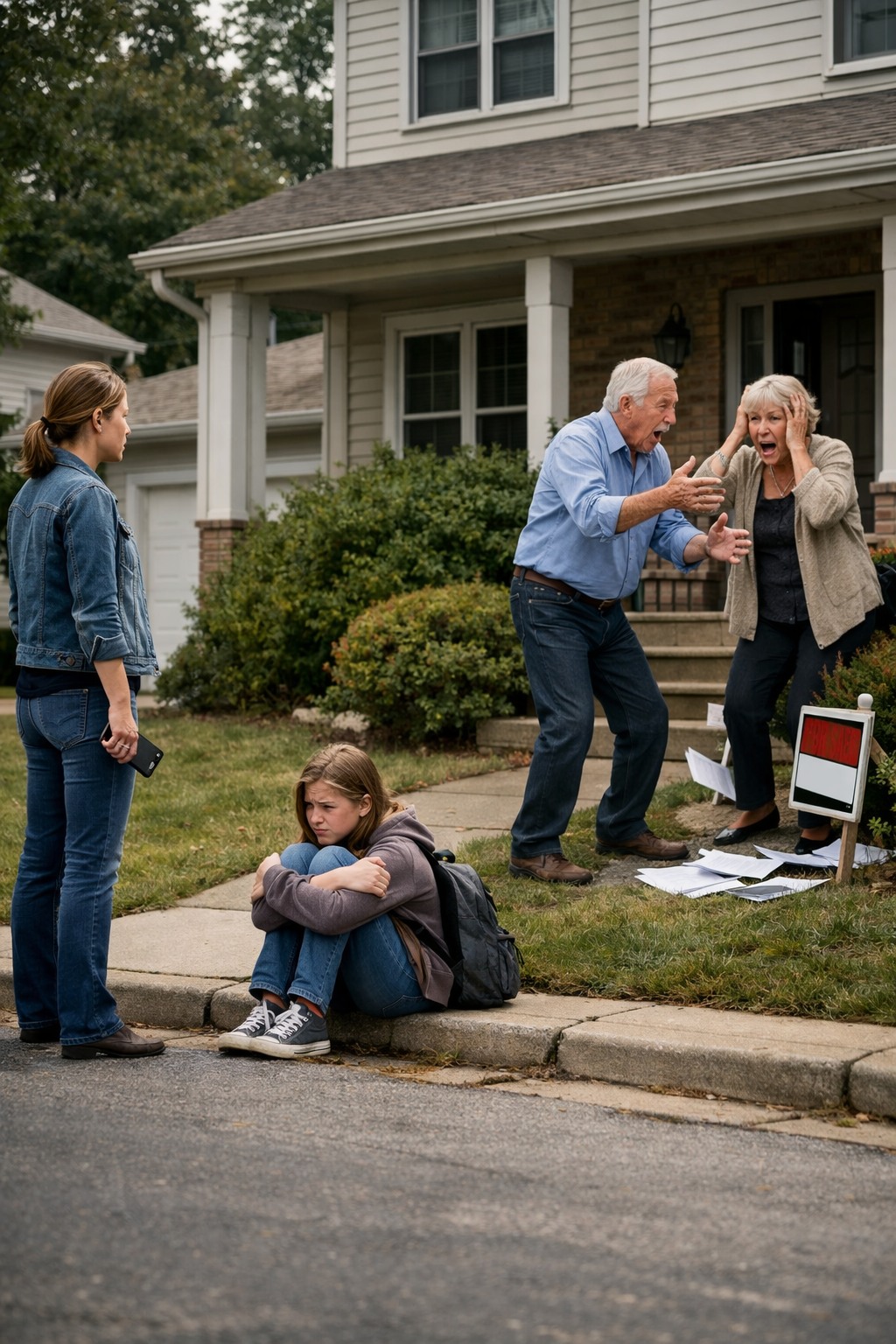
I looked at her—really looked. The faint red mark on her cheek where she’d pressed her face against her backpack on the sidewalk. The way her shoulders hunched like she was bracing for someone to tell her she’d caused this.
“I’m not mad,” I said. “I’m clear.”
Maya swallowed. “What does that mean?”
“It means I’m done pretending this is normal,” I said.
She nodded slowly, like part of her already knew.
When the phone rang again, I answered this time. My mother’s voice hit my ear like a slap.
“Marissa,” she said briskly, irritated, performing authority. “Brian says you’re being dramatic. Bills are due tomorrow.”
“Then pay them,” I said.
Silence.
Then my mother’s disbelief, sharp. “You always handle this.”
“I used to,” I replied, and ended the call.
Brian called immediately after, and this time I answered because I wanted him to hear my voice, calm and flat.
“What the hell is wrong with you?” he snapped. “Mom said you cut off the payments. Are you trying to ruin them?”
“You put my child outside,” I said.
Brian scoffed. “Oh my god, she was fine. She was being disrespectful. She kept talking back. She needed to learn—”
“You put my child outside,” I repeated, slower.
He made an angry sound. “She was taking up space. The baby—”
“What baby?” I cut in, my voice finally sharpening. “Your baby? You don’t have a baby, Brian. You don’t even have a job you keep longer than six months.”
He swore. “You think you’re better than everyone because you have a paycheck and you play single mom hero?”
“No,” I said. “I think you’re dangerous to my daughter.”
There was a pause, like my words landed somewhere he didn’t expect.
“She’s not your daughter,” I added. “She’s my daughter. And you don’t get to ‘teach her lessons’ with cold concrete and streetlights.”
Brian’s voice dropped into false reason. “Marissa, you need to calm down. You’re making a big deal out of nothing. Mom said she told you you don’t belong there anymore because you’re always judging.”
I laughed once, quietly, with no humor. “So that’s the line now? My fourteen-year-old doesn’t belong in her grandparents’ house at night?”
“You and Maya create problems,” Brian snapped. “You come in with your attitude, your rules, your—”
“My rules?” I said. “Like ‘don’t abandon a child outside’?”
He didn’t answer.
“Here’s what’s going to happen,” I said. “You are never alone with my daughter again. You don’t contact her. You don’t call her. You don’t message her. If you do, I’ll file a report.”
Brian’s breath hitched. “A report? Are you threatening me?”
“I’m informing you,” I said.
“You wouldn’t,” he said, and I heard it—the old certainty. The belief that I’d always back down.
I glanced at Maya, watching us with wide eyes. I lowered my voice.
“I already did,” I lied smoothly, because I needed him scared enough to pause. “And if you test me, I’ll make it real.”
Brian went quiet.
Then he muttered, “You’re psychotic,” and hung up.
I didn’t wait.
I called the non-emergency police line and made a report anyway. Not because I wanted Brian arrested. Because I wanted a paper trail. Because if my family tried to twist the story later—if they tried to claim Maya “ran away” or “was dramatic”—I needed the truth documented.
The officer who took my call was calm. He asked questions. Where was Maya now? Was she safe? Who put her outside? Was there any history of threats or violence?
I answered honestly. “There’s a history of financial control and emotional abuse,” I said. “And my brother’s escalating.”
The officer recommended I document everything and consider a protective order if contact continued. He also said something that made my stomach twist.
“Ma’am,” he said gently, “you did the right thing calling. But please understand: leaving a minor outside at night can be considered endangerment.”
Good, I thought. Let the word exist. Let it scare them.
That evening, Maya and I cooked together, not because we were hungry but because we needed normal. Pasta, burned garlic, laughter that sounded slightly forced at first and then real.
Before bed, Maya asked, “Are they still our family?”
I tucked the blanket around her shoulders and chose my words carefully.
“They are our relatives,” I said. “Family is something different.”
Maya’s eyes glistened, but she didn’t cry. She just nodded, like she was finally allowed to name what she’d felt.
In the dark, after she fell asleep, I stared at my ceiling and pictured my parents’ house. The mortgage. The utilities. The late fees that would stack like dominoes now that I’d stopped holding them up.
For the first time, that image didn’t make me anxious.
It made me certain.
